Table of Contents
- Why A Strong Trouser Choice Matters
- Start With Fit, Not Trends
- Pick A Color That Works Hard
- Choose Fabric For The Setting
- Build Several Outfits Around The Same Pair
- Use Shoes And Layers To Set The Dress Level
- Keep The Look Current And Care For It
- Common Mistakes To Avoid
- Conclusion
A reliable pair of trousers can make getting dressed simpler. Instead of building every outfit from scratch, start with one neutral pair that fits well, feels comfortable all day, and pairs with the shirts, layers, and shoes already in your closet. The result is a wardrobe that looks more deliberate without requiring a separate outfit for every occasion.
For shoppers looking at classic American trouser styles, Bills Khakis is a U.S. menswear brand focused on khakis, five-pocket pants, shirts, and accessories, with its products designed and manufactured in the United States. Its range of relaxed, classic, and straight fits, plus its fit guidance, makes it a useful reference point for anyone choosing durable trousers that can move between work, travel, and off-duty plans.
Why A Strong Trouser Choice Matters
Trousers occupy a large visual area of an outfit, so their color, shape, and condition quickly establish the overall tone. A crisp Oxford shirt can still look too casual when paired with faded, poorly fitting pants. Conversely, a clean pair of cotton twill trousers can make a T-shirt and simple sneakers look considered.
The most useful choice is usually neutral rather than flashy. Stone, navy, olive, charcoal, and medium brown are easy to repeat because they pair with light and dark tops. Smart-casual dressing is also about balance. Combine one or two polished pieces with relaxed items, rather than trying to make the entire outfit formal. The broad smart-casual dress code leaves room for personal style, but the occasion should always guide the final outfit.
Start With Fit, Not Trends
Fit matters more than whether a pair of trousers is labeled slim, straight, relaxed, or pleated. The waistband should sit securely without digging in or requiring a belt to hold the trousers up. The seat should lie smoothly, the thigh should move easily, and the leg should fall cleanly from hip to hem.
Try trousers while sitting, walking, bending, and climbing a few stairs. A mirror check alone will not reveal whether the rise feels restrictive or whether the fabric pulls when you move. A clean break at the shoe feels classic, while a slight crop can look more relaxed and contemporary. Avoid excessive stacking at the ankle, which can make otherwise good trousers appear too long.
Photorealistic full-length view of a casually dressed man testing the fit of neutral cotton trousers in a warm, softly lit bedroom, captured mid-step near a window during golden hour, with natural directional light, gentle shadows, and a calm, refined smart-casual atmosphere.
Signs The Fit Needs Work
- The waistband pinches, rolls, or gaps at the back.
- Front or side pockets pull open when standing normally.
- Fabric bunches heavily across the hips or seat.
- The thigh feels tight when sitting down.
- The hem pools over the shoe instead of falling neatly.
Pick A Color That Works Hard
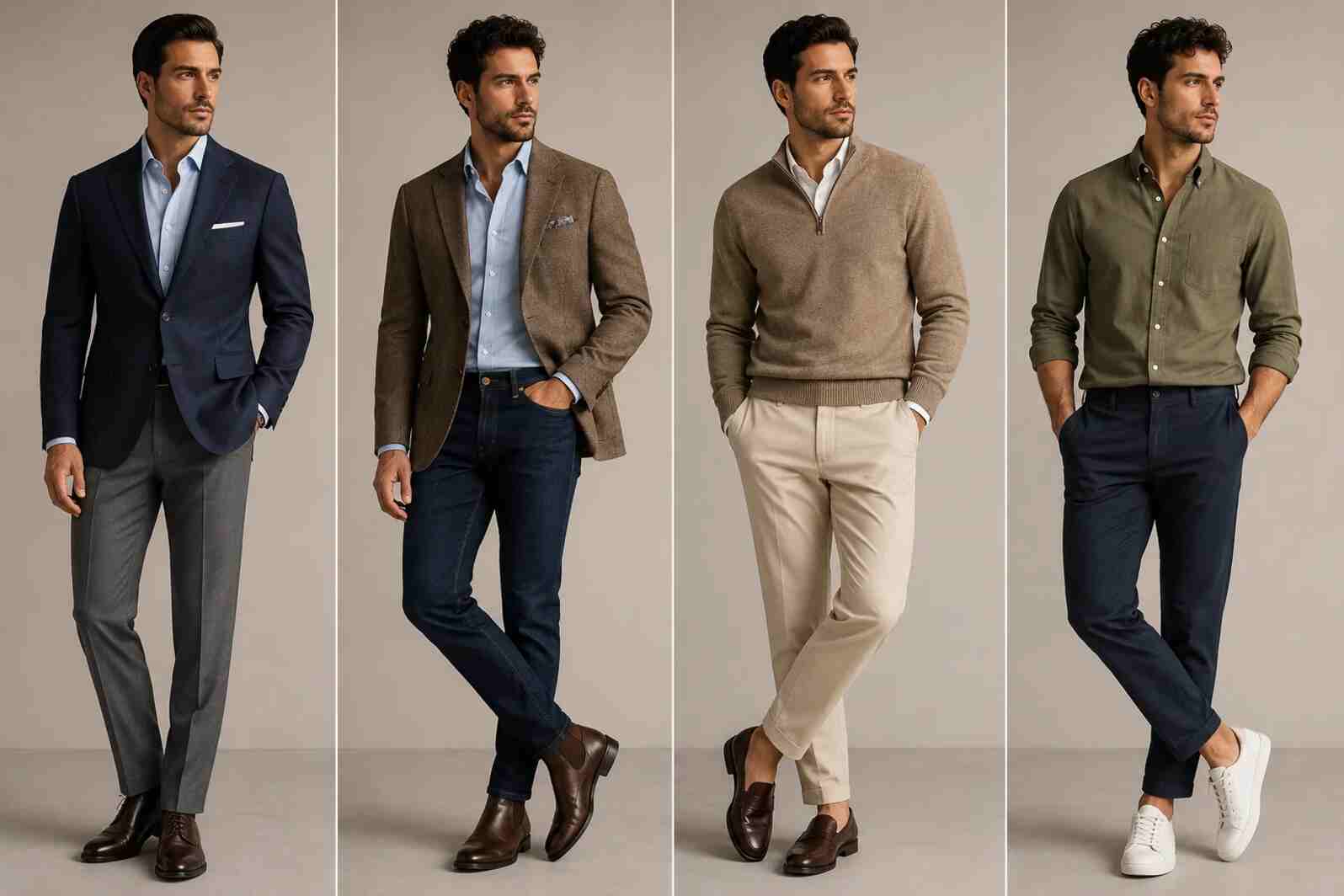
Color determines how often trousers will earn their place in rotation. Lighter shades such as stone and khaki look especially natural with navy, olive, white, blue, and cream. Darker navy, charcoal, and brown can feel sharper for dinner, an office, or an event where jeans might be too casual.
- Wear stone trousers with a navy knit and brown suede shoes.
- Pair olive trousers with a pale blue Oxford shirt and loafers.
- Use navy trousers with a gray sweatshirt and clean, low-profile sneakers.
- Match medium brown trousers with a cream overshirt and dark leather boots.
Start with the colors you already wear most often. If your closet contains navy outerwear, blue shirts, and white T-shirts, stone or olive trousers may pair more easily than black ones. If you prefer darker layers, charcoal or navy may provide a better foundation.
Choose Fabric For The Setting
Fabric affects formality, comfort, and maintenance. Cotton twill has structure and is a dependable choice for everyday smart-casual outfits. Denim is more casual, though a clean, dark pair can work in relaxed workplaces. Wool blends often look smoother and hold a crease well, while linen blends offer breathability but tend to show wrinkles more readily.
Technical fabrics can be practical for commuting and travel when they provide stretch, easy care, or resistance to creasing. They may look less traditional, so consider the finish before wearing them in a more polished setting. Before buying, ask whether the fabric breathes well, keeps its shape after washing, handles frequent wear, and suits the weather where you live.
Build Several Outfits Around The Same Pair
Office Or Coworking Space
Wear trousers with a tucked Oxford shirt, a fine-gauge knit, a belt, and loafers. Add an unstructured blazer when the meeting or workplace calls for more polish. The trousers remain the constant, while the jacket determines how formal the outfit feels.
Casual Dinner
Swap the office shirt for a textured polo, relaxed button-down, or overshirt. Suede loafers, leather sneakers, and uncomplicated boots all work well, provided they are clean and proportionate to the trouser leg.
Weekend Errands
A heavyweight T-shirt, a chore jacket, and low-profile sneakers keep the same trousers casual. Limit the palette to two or three complementary colors so the outfit looks intentional without becoming overly coordinated.
Travel Day
Choose a comfortable shirt, a light jacket, and shoes that are easy to remove. A second layer, such as an overshirt or cardigan, makes the outfit more adaptable after arrival without adding much bulk.
Use Shoes And Layers To Set The Dress Level
Shoes can immediately change the message of the same trousers. Minimal sneakers make them casual; loafers add polish; derbies feel more structured; and chukka boots sit comfortably between the two. Match the visual weight to the trouser shape. Wider legs usually benefit from substantial shoes, while narrower trousers often look better with slimmer footwear.
Layers create variety across seasons. Overshirts, cardigans, chore coats, field jackets, and lightweight blazers all give a repeat pair of trousers a different purpose. A useful formula is a clean base layer, a textured middle layer, and a practical outer layer. If the shirt and trousers are soft or relaxed, include one structured element to prevent the outfit from looking shapeless.
Keep The Look Current And Care For It
Aim for relaxed but controlled proportions. Trousers do not need to be tight to look sharp, and a roomier fit should still have a clear line through the leg. Texture, tonal color combinations, and purposeful layering often create more interest than chasing a new cut every season.
- Read the care label before washing or pressing.
- Air out trousers between wears when they are clean and odor-free.
- Use a gentle wash cycle only when the fabric permits it.
- Hang trousers from the waistband or use proper trouser hangers.
- Repair loose hems, missing buttons, and small tears early.
Common Mistakes To Avoid
- Choosing trousers that fit at the waist but are loose or restrictive everywhere else.
- Buying a color that works with only one shirt.
- Ignoring the hem length and letting excess fabric collect over the shoes.
- Combining several casual pieces without one polished element.
- Wearing worn or dirty shoes with otherwise sharp clothing.
Conclusion
One strong pair of trousers can give a smart-casual wardrobe real structure. Prioritize fit, a versatile neutral color, suitable fabric, and a hem that works with your preferred shoes. Then use shirts, footwear, and layers to adjust the outfit for work, dinner, travel, or the weekend. The best pair is not necessarily the newest or boldest option. It is the one you can wear often, comfortably, and with confidence.