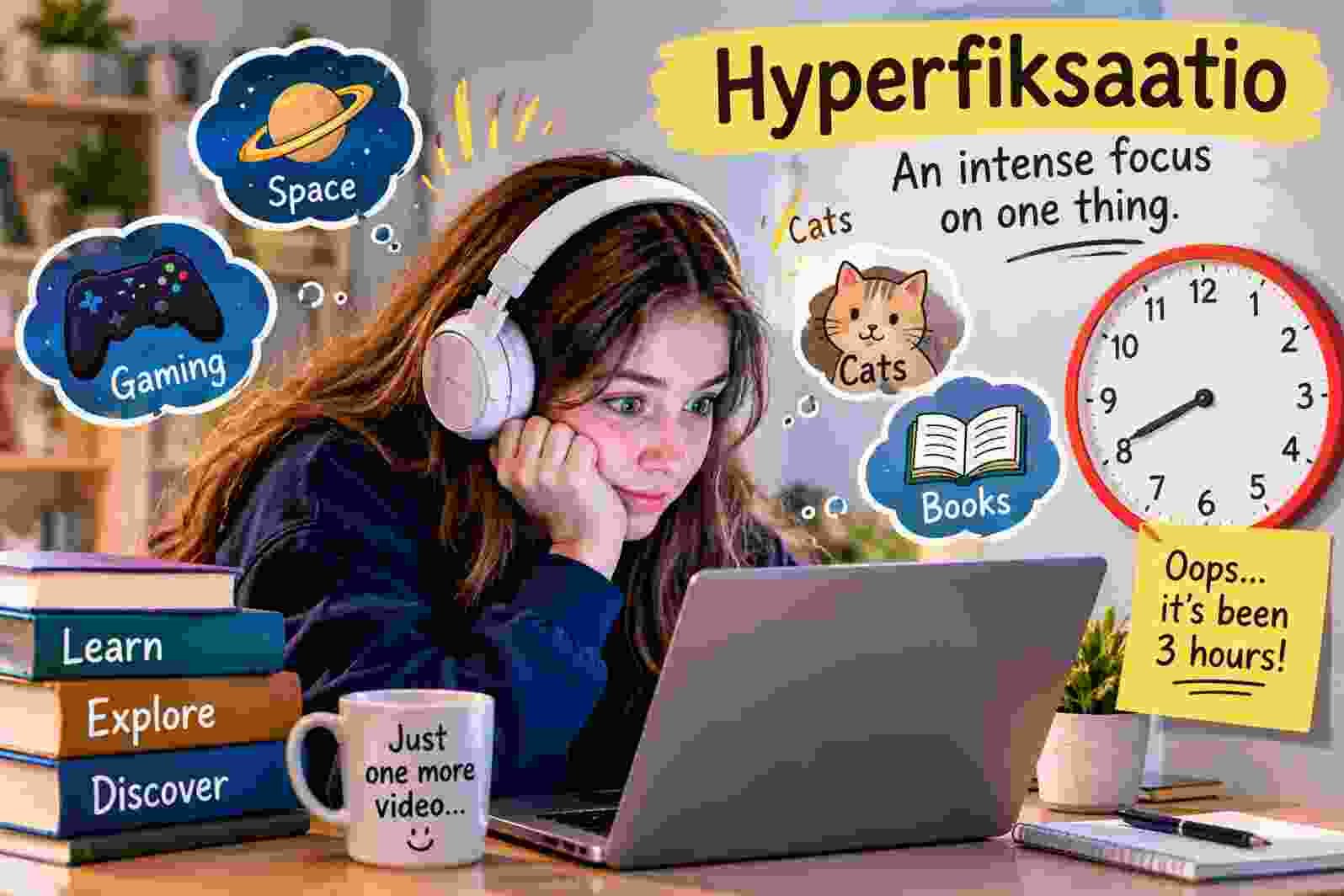
Have you ever become so interested in something that you lose track of time?
Maybe you spend hours watching videos, reading articles, playing games, or learning about a hobby. You may even forget to eat or take a break.
This experience is often called Hyperfiksaatio, which is the Finnish word for hyperfixation. Hyperfiksaatio means having a strong focus on a specific topic, hobby, or activity.
It is often discussed in relation to ADHD and autism. However, anyone can experience it.
Sometimes hyperfixation helps people learn new skills and gain knowledge. But when it becomes too intense, it may affect work, studies, sleep, and daily life.
In this article, you’ll learn what Hyperfiksaatio means, its signs, causes, benefits, and ways to manage it.
What Is Hyperfiksaatio?
Hyperfiksaatio is the Finnish term for hyperfixation.
It describes a strong interest in a particular subject, hobby, or activity.
When someone experiences hyperfixation, they may spend a lot of time thinking about or doing one thing they enjoy.
For example:
- Watching every episode of a favourite TV show
- Learning everything about photography
- Playing a video game for hours
- Researching a topic they love
During this time, other activities may become less important.
A person may lose track of time or find it difficult to stop.
Hyperfiksaatio is not a medical diagnosis. It is simply a term used to describe intense interest and focus.
Common Signs of Hyperfiksaatio:
People experience hyperfixation in different ways.
Here are some common signs.
1. Strong Interest in One Topic
A person may become deeply interested in one subject.
They may want to learn everything about it.
2. Losing Track of Time
Hours can pass without them noticing.
What feels like a few minutes may turn into several hours.
3. Thinking About It Constantly
The interest stays on their mind throughout the day.
They may think about it while working, eating, or relaxing.
4. Difficulty Switching Tasks
Moving on to another activity can feel difficult.
They may want to continue focusing on the same thing.
5. Forgetting Daily Tasks
Some people forget:
- Meals
- Household chores
- Messages
- Appointments
because they are focused on one interest.
6. Wanting to Learn More
People often spend hours:
- Reading articles
- Watching videos
- Joining communities
- Discussing the topic with others
7. Feeling Frustrated When Interrupted
Being forced to stop can feel annoying or upsetting.
Some people need time to shift their focus.
What Causes Hyperfiksaatio?
There is no single cause of hyperfixation.
Several factors may contribute.
1. ADHD
Hyperfixation is often discussed among people with ADHD.
Some people with ADHD may struggle to focus on tasks they find boring.
At the same time, they may focus intensely on activities they enjoy.
However, hyperfixation is not an official symptom used to diagnose ADHD.
2. Autism
Many autistic people have strong interests in particular subjects.
These interests can bring comfort, enjoyment, and a sense of purpose.
Hyperfixation and autistic special interests are similar, but they are not exactly the same.
3. Personal Interests
Anyone can experience hyperfixation.
A new hobby, exciting project, or favourite activity can hold someone’s attention for a long time.
4. Enjoyment and Motivation
People tend to focus more on activities they enjoy.
When something feels rewarding, it becomes easier to stay interested for hours.
Hyperfiksaatio and ADHD:
Hyperfiksaatio is commonly mentioned in ADHD communities.
People with ADHD often have difficulty managing attention.
This does not mean they cannot focus.
In fact, they may focus very deeply on activities they enjoy.
For example, someone may struggle to complete routine work but spend hours researching a favourite topic.
It is important to remember that hyperfixation alone does not mean a person has ADHD.
Only a qualified healthcare professional can diagnose ADHD.
Hyperfiksaatio vs Hyperfocus:
People often use these terms interchangeably, but they are slightly different.
Hyperfiksaatio (Hyperfixation)
- Strong interest in a subject, hobby, or activity
- May last days, weeks, or even longer
- Focus is on a specific interest
Hyperfocus
- Deep concentration on a particular task
- Often lasts for a shorter period
- Focus is on completing an activity
Example
Hyperfixation: Following a favourite TV series for weeks.
Hyperfocus: Spending several hours editing a video without noticing the time.
Benefits of Hyperfiksaatio:
Hyperfixation is not always negative.
It can have several benefits.
Better Learning
People often learn a lot about topics they enjoy.
Improved Skills
Regular practice can help improve abilities and expertise.
More Creativity
Deep interest can inspire new ideas and creative projects.
Personal Enjoyment
Favourite activities can bring happiness and relaxation.
Better Problem-Solving
Learning more about a subject can improve understanding and critical thinking.
Challenges of Hyperfiksaatio:
Hyperfixation can become a problem if it affects everyday life.
Poor Time Management
People may spend more time than planned on one activity.
Ignoring Basic Needs
Some people forget to:
- Eat
- Drink water
- Rest
- Sleep
School or Work Problems
Important tasks may be delayed or ignored.
Reduced Social Time
A person may spend less time with family and friends.
Mental Tiredness
Long periods of focus without breaks can lead to burnout and exhaustion.
How to Manage Hyperfiksaatio:
You do not need to stop enjoying your interests.
The goal is to create a healthy balance.
1. Set Time Limits
Use a timer or alarm.
This can remind you to take breaks.
2. Follow a Daily Routine
Plan time for:
- Work
- Study
- Meals
- Exercise
- Hobbies
- Sleep
3. Take Regular Breaks
Stand up, stretch, and move around.
Short breaks can help reduce mental fatigue.
4. Make a To-Do List
Write down important tasks.
This makes it easier to stay organised.
5. Stay Connected
Spend time with friends and family.
Healthy relationships are important.
6. Get Enough Sleep
Try to maintain a regular sleep schedule.
Sleep supports concentration and overall health.
7. Seek Professional Help if Needed
Talk to a healthcare professional if hyperfixation begins to affect your daily life.
When Should You Seek Help?
Consider professional support if:
- You regularly skip meals or lose sleep
- You struggle to complete daily tasks
- Your work or studies are suffering
- You cannot control how much time you spend on an activity
- Your relationships are being affected
- You feel stressed when you cannot continue an activity
A professional can help identify any underlying issues and suggest useful strategies.
Frequently Asked Questions (FAQs)
What does Hyperfiksaatio mean?
Hyperfiksaatio is the Finnish word for hyperfixation. It means having a strong interest in a particular topic, hobby, or activity.
Is Hyperfiksaatio a medical condition?
No. It is not a medical diagnosis. It is an informal term used to describe intense focus and interest.
Is Hyperfiksaatio related to ADHD?
Yes. It is often discussed in relation to ADHD, although it is not an official diagnostic symptom.
Can people without ADHD experience hyperfixation?
Yes. Anyone can become deeply interested in something they enjoy.
How long can hyperfixation last?
There is no set time. It may last a few hours, several days, weeks, or longer.
Is hyperfixation always harmful?
No. It can help with learning, creativity, and skill development. It only becomes a problem when it affects daily life.
Can hyperfixation go away?
Yes. Interests often change over time, and a person may eventually move on to something new.
How can I manage hyperfixation?
Setting time limits, following a routine, taking breaks, and staying organised can help maintain balance.
Final Thoughts:
Hyperfiksaatio is a strong interest in a particular subject, hobby, or activity.
It can help people learn new things, develop skills, and enjoy their favourite interests.
However, spending too much time on one activity can sometimes affect health, work, studies, and relationships.
The key is balance. Enjoy your interests, but also make time for rest, responsibilities, and the people around you. When managed well, hyperfixation can be a positive and rewarding experience.
Want to learn more about mental health, personal growth, and everyday wellness? Visit ourbetterclass.com to explore helpful guides.